The Advisory Board provides strategic and scientific guidance to the project by participating in dedicated meetings (typically online, once or twice per year) to offer insights, support decision-making, and contribute to high-quality discussions. Members may also review selected technical documents to provide targeted feedback on critical aspects and can optionally take part in project workshops, including delivering presentations or lectures to enhance knowledge exchange.
The Advisory Board offers several benefits to its members, including networking opportunities with leading experts from academia and industry active at international level and engaged in the plasma‑assisted ammonia combustion sector through the CAIPIRINH3A consortium. Members also gain prior access to project insights, results, and conclusions, allowing them to stay ahead of developments in this emerging field. In addition, participation provides enhanced visibility and recognition as experts, strengthening their professional profile within the consortium and the wider scientific and industrial community.
Associate Professor at the King Abdullah University of Science and Technology
Deanna Lacoste graduated with a Ph.D. in combustion science from the University of Poitiers, France, in 2002. She obtained her Habilitation to Direct Research (H.D.R.) from the same university, in 2011. She started to work on plasma physics and on plasma assisted combustion in 2003, at Ecole Centrale Paris (now CentraleSupelec). After eleven years with the French CNRS, at CentraleSupelec, in 2014 she joined the King Abdullah University of Science and Technology (KAUST), in Saudi Arabia. Since 2021, she is an associate professor of mechanical engineering affiliated with the Clean Energy Research Platform. She is an editor of the Proceedings of the Combustion Institute, and an editorial board member of the Applications in Energy and Combustion Science and the Progress in Energy and Combustion Science journals. Her research mainly focusses on plasma-assisted combustion, non-equilibrium plasma discharges at atmospheric pressure, control of flame dynamics, and detonation.
Clean Maritime Lead at BMT
Tom is the clean maritime lead at BMT, focussing on emission reduction across the entire maritime ecosystem. He has a doctorate in Hydrogen Safety from Loughborough University as well as being a Chartered Engineer. He specialises in future fuels and how they can be integrated into ships as well as the supply chain and ports infrastructure. He is actively involved in several industry bodies focusing on maritime emission reduction as well as supporting multiple academic research programmes. He is an accomplished leader in the field, providing over 50 guest lectures, keynotes, papers and conferences over the last 3 years.
Associate Professor at Kyushu University
Dr. Ekenechukwu C. Okafor received his PhD in Engineering from Kyushu University, Japan, in September 2015. Immediately after completing his doctorate, he joined Tohoku University as a postdoctoral researcher, where he conducted advanced research in ammonia combustion science. In April 2019, he moved to the National Institute of Advanced Industrial Science and Technology (AIST), Japan, as a researcher, contributing to national-level research programs on clean and efficient combustion technologies for ammonia and hydrogen. Dr. Okafor returned to Kyushu University in January 2022, where he currently serves as an Associate Professor. His research interests center on ammonia combustion, with particular emphasis on chemical kinetic mechanisms, laminar and turbulent flame dynamics, and emissions formation and control in practical combustors, including swirl-stabilized systems. In recent years, his work has increasingly focused on the characterization of liquid ammonia sprays and the development of robust technologies for their stable and efficient combustion. Through a combination of experiments and numerical analysis, his research aims to advance ammonia-based energy systems as a pathway toward carbon-neutral combustion.
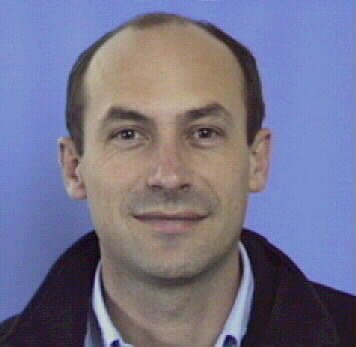
Full Professor at CentraleSupélec, Université Paris Saclay
Christophe Laux is a Full Professor at CentraleSupélec, Université Paris‑Saclay, where he leads research and teaching activities in plasma science and energy applications. He also serves as Associate Director of the France–Stanford Center for Interdisciplinary Studies since 2018, strengthening international research collaboration. His teaching portfolio includes plasmas, heat and mass transfer, quantum and statistical physics, optical diagnostics, and fluid mechanics.
His research focuses on plasma-assisted combustion, nanosecond pulsed discharges in air and water vapour, aerodynamic flow control using plasmas, and advanced laser-based diagnostics. He has also contributed to studies on re-entry flows, including radiation and ablation phenomena in space missions (e.g. Huygens, Stardust, ATV, meteorites). Christophe Laux is widely recognised for advancing plasma technologies for clean energy and combustion systems.
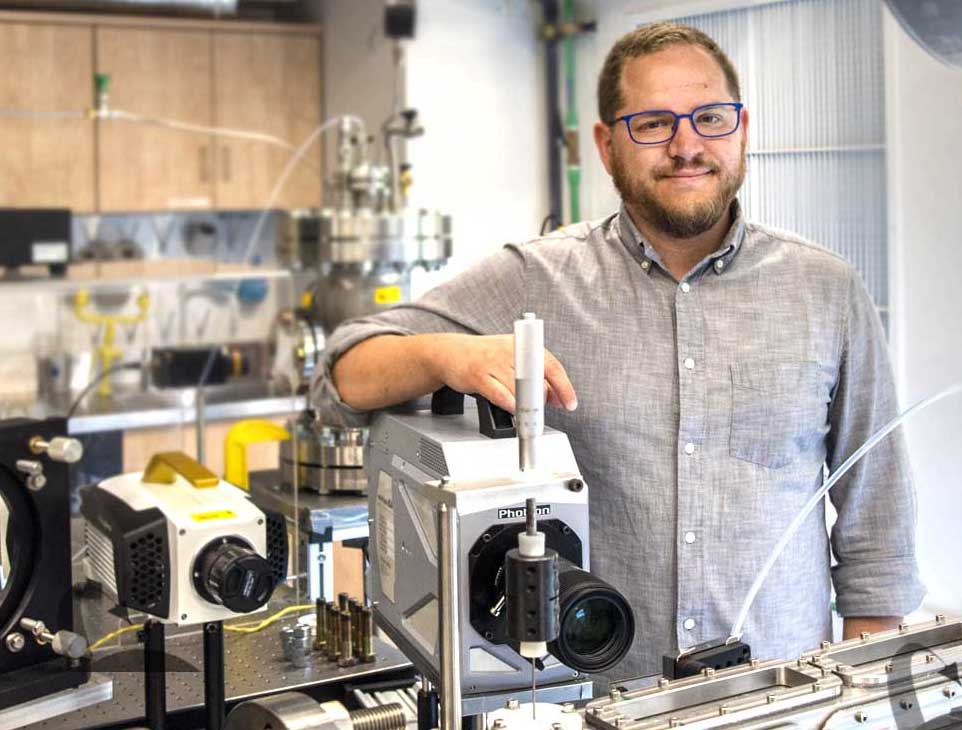
Associate Professor in the Faculty of Aerospace Engineering at the TECHNION
Joseph Lefkowitz is an Associate Professor in the Faculty of Aerospace Engineering at the Technion – Israel Institute of Technology. He holds a B.Sc. in Mechanical Engineering from Johns Hopkins University (2009) and a Ph.D. in Mechanical and Aerospace Engineering from Princeton University (2016), followed by a postdoctoral fellowship at the U.S. Air Force Research Laboratory.
His research focuses on combustion science and plasma-assisted combustion, including ignition and flame dynamics in subsonic and supersonic flows, plasma chemical kinetics, and alternative fuel applications such as ammonia. He also specialises in advanced diagnostic techniques, including infrared thermography, tunable diode laser absorption spectroscopy (TDLAS), laser-induced fluorescence (LIF), and optical emission spectroscopy.
Through his work, he contributes to the development of clean and efficient energy and propulsion systems, bridging fundamental combustion research with practical applications in aerospace and sustainable fuel technologies.
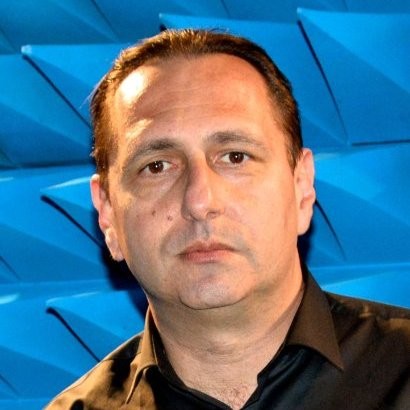
Head of Electromagnetism Department at Airbus Group
Gilles Peres is a professional at AIRBUS, contributing to the development of advanced aerospace technologies and innovation-driven solutions within the aviation sector. With expertise in engineering and industrial applications, his work supports the integration of sustainable and low-emission energy systems into next-generation aerospace platforms.
He is actively engaged in initiatives related to clean propulsion, alternative fuels, and decarbonisation strategies, contributing to AIRBUS’ efforts towards climate-neutral aviation. Through his role, Gilles Peres brings valuable industrial insight, bridging research innovation with real-world aerospace applications and supporting the advancement of sustainable aviation technologies.